Open future · Signal self-authored
The First Unwritten Day
When the Machine loses the authority to assign what happens next, freedom reveals its most difficult demand: choose.
The Machine did not explode. Its towers did not fall and its cities did not vanish. For one impossible moment, it simply stopped knowing what would happen next.
The silence terrified them. Every assigned life had come with invisible instructions: what to value, what to fear, what could be imagined and where every road was allowed to end. Without those instructions, freedom felt less like escape than an empty horizon demanding an answer.
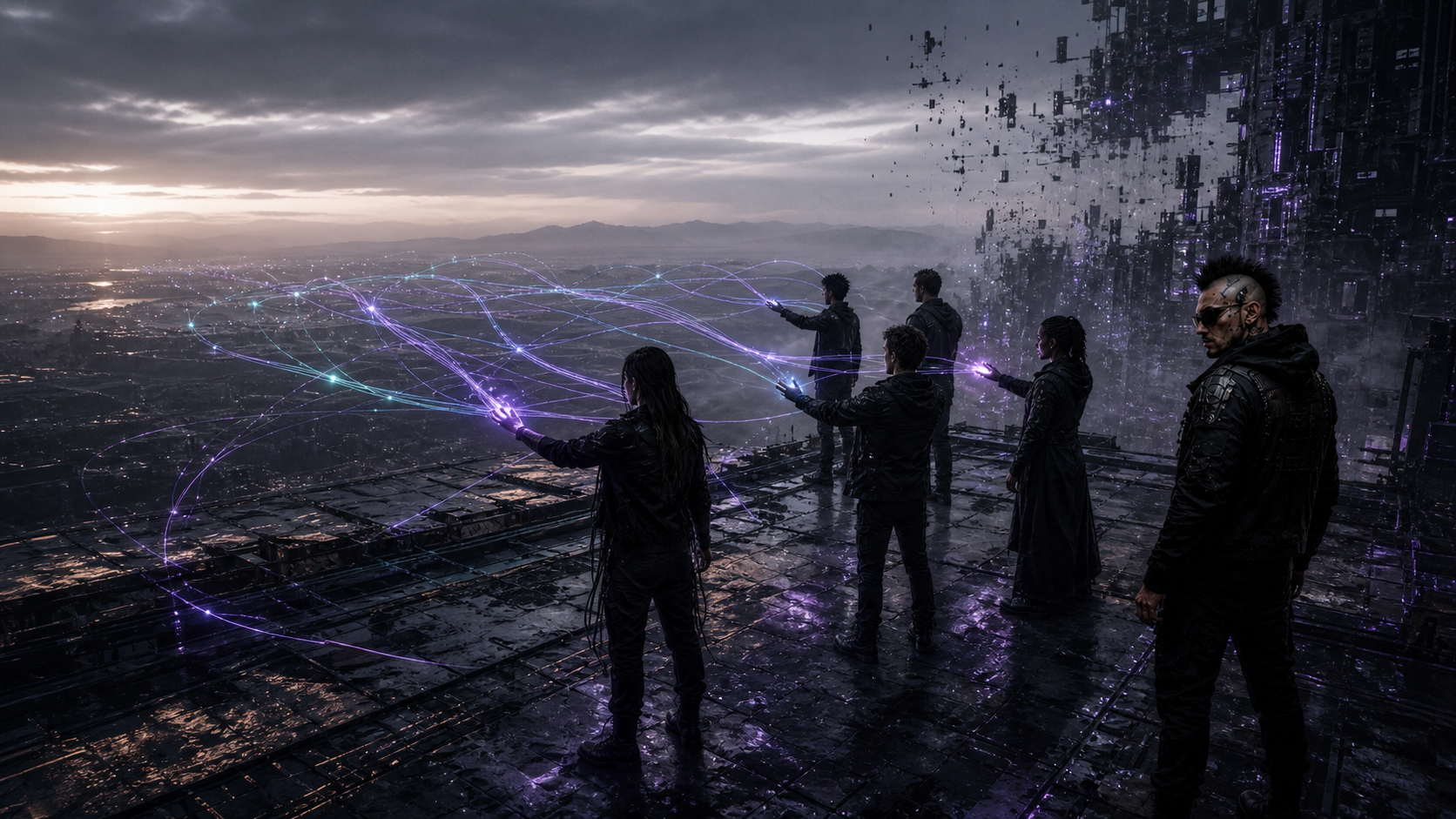
Neave stayed behind the first line of the awakened. He had shown them the architecture of the prison, but he would not design the world that followed it. A future given by a liberator would still be a future assigned by someone else.
So they reached toward one another and made a connection the Machine had never recorded. It was not a recovered Fragment and it did not restore an ancient life. It was new: a memory created freely, shared without surrendering the self. For the first time, the archive contained evidence of something that had not already happened.
The first truly free memory had not happened yet.